Takeoff (deceased)
$26 million

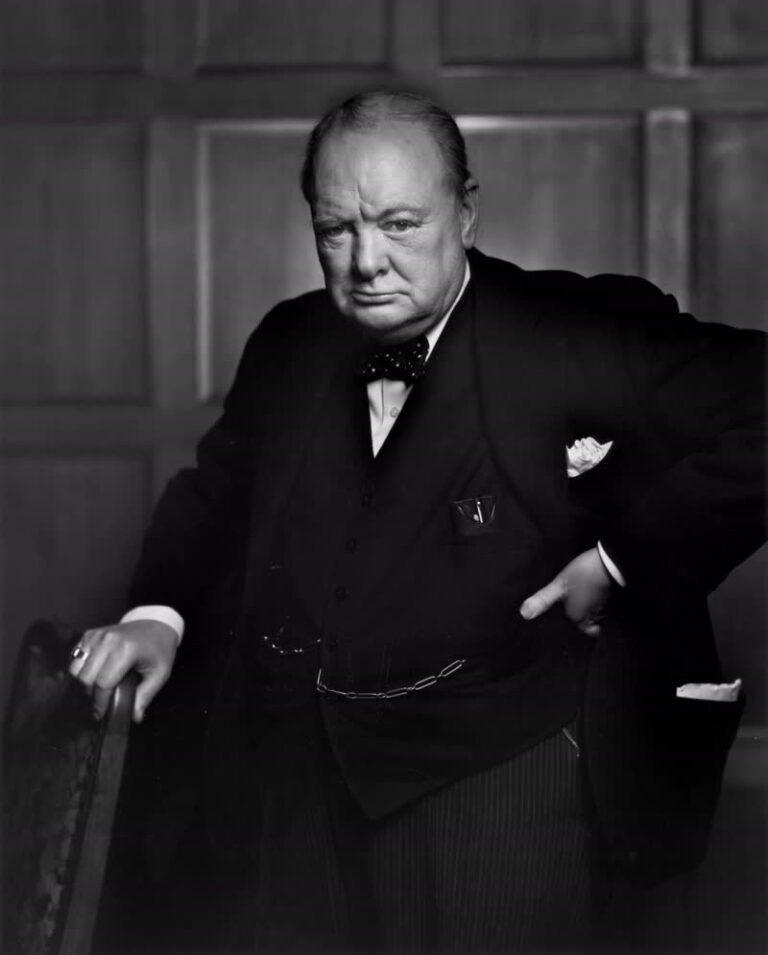
Sir Winston Leonard Spencer Churchill (November 30, 1874 – January 24, 1965) was a British statesman, military officer, author, and orator who served as Prime Minister of the United Kingdom from 1940 to 1945 and again from 1951 to 1955. Born at Blenheim Palace, Oxfordshire, England, Churchill is widely regarded as one of the most significant leaders of the 20th century for his role in guiding Britain and the Allied powers to victory during World War II. He passed away on January 24, 1965, at his London home at Hyde Park Gate, at the age of 90. His estimated net worth at the time of his death was approximately $10 million, substantially from his literary output, which earned him the Nobel Prize in Literature in 1953.
Churchill entered Parliament as a Conservative MP in 1900. He held numerous Cabinet positions before becoming Prime Minister on May 10, 1940 — the same day Germany invaded France and the Low Countries. His wartime leadership was defined by resolute moral clarity and the power of his oratory, which helped sustain British morale during the war. Speeches including “We shall fight on the beaches” and “Their finest hour” became canonical expressions of democratic resolve. He cultivated the Allied coalition with Franklin Roosevelt and Josef Stalin and was a central architect of the post-war order.
Churchill married Clementine Ogilvy Hozier on September 12, 1908. They had five children: Diana, Randolph, Sarah, Marigold (who died in childhood), and Mary. His marriage was deeply loving and a crucial source of personal stability. Churchill was also a prolific painter, and his works are held in private and public collections around the world.
Winston Churchill received the Nobel Prize in Literature (1953) and honorary United States citizenship granted by President John F. Kennedy in 1963. He was voted the greatest Briton of all time in a 2002 BBC public poll. His legacy encompasses both his towering leadership in humanity’s most critical hour and the complexities of his attitudes toward empire — aspects that continue to be examined by historians.