
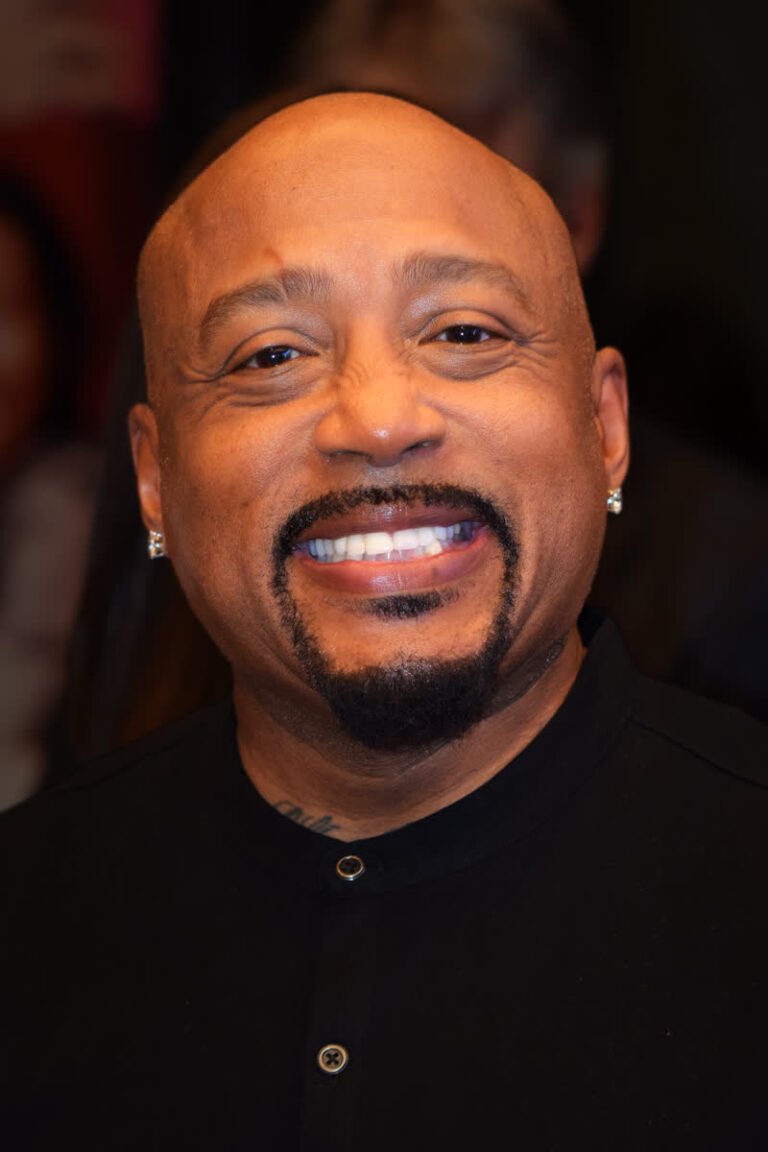
Daymond John’s net worth is estimated at $350 million, accumulated through three distinct phases: founding FUBU, the urban fashion brand that generated over $6 billion in lifetime sales; investing in portfolio companies as a Shark on ABC’s Shark Tank; and building The Shark Group, a consulting and brand strategy firm. John’s story is unusual among American business figures in that his entire fortune originated from a Queens apartment with a $40 budget and no formal business education — a narrative he has translated into a successful speaking and authorship career reaching millions of entrepreneurs.
Updated March 2026: According to PR Newswire, Daymond John joined Jobber’s 2026 Small Business Grants program in March 2026, reinforcing his continued role as a mentor to small business owners and entrepreneurs. He was featured on the March/April 2026 cover of Entrepreneur magazine. His net worth reflects FUBU’s ongoing brand equity, his Shark Tank investment portfolio, and The Shark Group’s client base.
Daymond Garfield John was born on February 23, 1969, in Brooklyn, New York, and raised in Hollis, Queens, after his parents divorced when he was approximately 10 years old. His mother, Margot John, raised him largely on her own after the separation. She was a critical figure in the early years of FUBU — mortgaging the family’s Hollis home to raise $100,000 in startup capital for the business, and sewing the original FUBU hats and garments herself in the family living room.
John attended Catholic school for seven years and subsequently enrolled at what is now known as Bayside High School, graduating through a work-study program that allowed him to work a day job while completing his high school requirements — a scheduling necessity driven by financial pressure rather than academic disengagement. He did not attend college. By age 10 he was distributing flyers at $2 per hour; in his late teens and early twenties he drove a commuter van and worked as a waiter at a Red Lobster in Hollis to fund his initial business ventures, according to Wikipedia.
In 1992, John began selling hand-sewn wool hats branded “FUBU” — an acronym for “For Us, By Us” — in the Hollis neighborhood of Queens. He generated $800 in sales on the first day by selling hats from his car. In 1993, a pivotal promotional breakthrough occurred when rapper LL Cool J, a childhood friend, agreed to wear FUBU clothing in a Gap television advertisement; LL Cool J’s endorsement instantly elevated the brand’s credibility in hip-hop and urban fashion circles.
In 1994, FUBU secured a deal with Samsung’s textile division in Korea at a trade show in Las Vegas, generating $300,000 in orders and providing the manufacturing infrastructure for rapid scaling. By 1998, FUBU was generating $350 million in annual sales — extraordinary for a brand less than six years old — and ultimately generated over $6 billion in total sales over its peak years, making it one of the most commercially successful American fashion brands of the 1990s.
John joined ABC’s Shark Tank as an investor in 2009 during the show’s first season. He has appeared in over 350 episodes and invested in more than $8.5 million worth of businesses on camera. His most successful Shark Tank investment is Bombas, the mission-driven sock and apparel company, which had generated over $1.3 billion in cumulative sales as of 2023, ranking it among the top-performing Shark Tank companies in the show’s history. John also holds a significant stake in Scholly, the scholarship-matching platform, which returned 40–60 times his initial investment according to public reporting. In January 2026, John appeared on CNBC advising aspiring entrepreneurs to maintain a day job while building their businesses — advice grounded in his own Red Lobster years.
John married Heather Taras in 2018. He has three daughters: Yasmeen and Destiny from a prior marriage, and Minka Jagger John, born March 2, 2016, with Heather. He has spoken openly about the challenges of being an absent father during the early FUBU years, crediting his ex-wife as a strong mother despite his own shortcomings during that period.
In 2017, John was diagnosed with stage II thyroid cancer. He underwent surgery and treatment and has described the experience as a clarifying moment that deepened his focus on meaningful work. He has also disclosed that he has dyslexia, a condition he discusses openly in his books and speeches as a reframing of perceived disadvantage into an entrepreneurial asset. He is an active philanthropist with a board role at the Network for Teaching Entrepreneurship (NFTE), a nonprofit that brings business education to underserved youth, and he is a vocal advocate for Black entrepreneurship.
John resides in New York. His business-world peers on CelebrityFlex include Tony Robbins and Grant Cardone, both of whom have built multi-hundred-million dollar platforms on the intersection of entrepreneurship education and personal branding.
Daymond John’s net worth is estimated at $350 million in 2026. This figure reflects the accumulated value of his FUBU brand equity, his Shark Tank investment portfolio — anchored by Bombas’s $1.3 billion in cumulative sales — The Shark Group consulting operation, and income from bestselling books and speaking engagements.
Bombas, the mission-driven sock and apparel company that donates one item to a homeless shelter for every item sold, is Daymond John’s most commercially successful Shark Tank investment. The company had surpassed $1.3 billion in cumulative sales as of 2023, making it one of the highest-revenue businesses in the show’s 15-year history. John also achieved a reported 40–60x return on his investment in Scholly, the scholarship-matching platform.
John started FUBU in 1992 with a $40 budget, sewing wool hats by hand in the family home in Hollis, Queens, with his mother’s help. His mother subsequently mortgaged the family house to raise $100,000 in startup capital. The decisive breakthrough was convincing childhood friend and rapper LL Cool J to wear FUBU gear in a Gap ad in 1993, providing the brand with instant hip-hop credibility that no advertising budget could have purchased. A Samsung trade show deal in Las Vegas in 1994 provided the manufacturing infrastructure for the brand to scale from regional to national distribution.