Tom Baker
$3 million

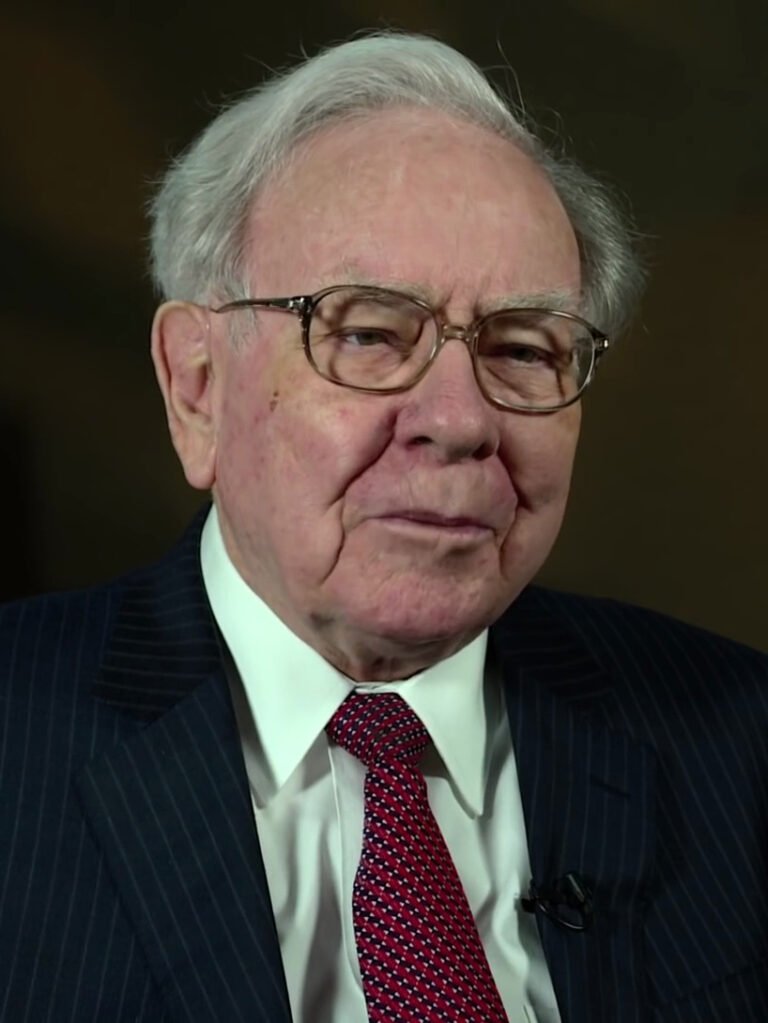
Warren Buffett has an estimated net worth of $149 billion, cementing his position as one of the five wealthiest people on the planet. The 95-year-old Omaha native built his fortune almost entirely through a single vehicle: Berkshire Hathaway, the conglomerate he led as CEO for six decades. He stepped down from the chief executive role at the end of 2025, passing the reins to Greg Abel, but retains his position as Chairman of the Board.
Updated March 2026: According to the Forbes World’s Billionaires List 2026, Warren Buffett’s net worth stands at $149 billion, reflecting the continued appreciation of his Berkshire Hathaway stake despite the company’s Q4 2025 earnings decline.
Warren Edward Buffett was born on August 30, 1930, in Omaha, Nebraska. His father, Howard Buffett, was a stockbroker who later served four terms in the U.S. House of Representatives. The entrepreneurial instinct manifested early: Buffett sold chewing gum door-to-door at age 6, delivered newspapers on multiple routes by age 13, and purchased his first stock — three shares of Cities Service Preferred — at age 11 alongside his sister Doris. At 14, he used $1,200 in savings from his paper routes to purchase a 40-acre farm in Nebraska, which he rented to a local farmer.
Buffett attended the University of Pennsylvania’s Wharton School for two years before transferring to the University of Nebraska, where he graduated with a Bachelor of Science in Business Administration in 1950. He was initially rejected by Harvard Business School. He then applied to Columbia Business School after reading that Benjamin Graham taught there, earning a Master of Science in Economics in 1951. Graham became his mentor. Buffett also studied at the New York Institute of Finance.
After working briefly for Graham’s investment firm in New York, Buffett returned to Omaha in 1956 and established Buffett Partnership Ltd. with $105,100 in initial capital, of which $100 came from his own pocket. Over the following 13 years, the partnership generated annual returns of approximately 29.5%, dramatically outperforming the Dow Jones Industrial Average. He liquidated the partnership in 1969, citing an overheated market.
During the partnership years, Buffett quietly accumulated shares of a struggling Massachusetts textile manufacturer called Berkshire Hathaway. He took control of the company in 1965. His initial intent was to run it as a textile business, but he soon recognized the mills as a declining industry and shifted Berkshire into insurance and then into a diversified conglomerate. The 1967 acquisition of National Indemnity Company provided the float — policyholder premiums held before claims are paid — that Buffett would use as permanent, low-cost capital to fund equity purchases for decades.
Key acquisitions over Buffett’s tenure include GEICO (completed in 1996), Coca-Cola (1988, $1.2 billion initial investment), American Express, and the $44 billion acquisition of BNSF Railway in 2010. By 2025, Berkshire’s cash and short-term Treasury holdings reached a record $373 billion, reflecting Buffett’s discipline in waiting for attractive valuations, with new positions added in UnitedHealth Group and Nucor Corporation, according to Investopedia’s coverage of the 2026 Berkshire shareholder letter.
Berkshire Hathaway’s per-share book value has grown at a compound annual rate of approximately 19.8% from 1965 through 2024, compared with 10.2% for the S&P 500 with dividends included. At the end of 2025, Buffett stepped down as CEO after more than 60 years in the role, with Greg Abel assuming the chief executive position. Buffett remains Chairman.
Buffett married Susan Thompson on April 19, 1952. The couple had three children: Susan Alice Buffett (b. 1953), Howard Graham Buffett (b. 1954), and Peter Andrew Buffett (b. 1958). Susan and Warren separated informally in 1977, though they remained legally married until Susan’s death from oral cancer on July 29, 2004. With Susan’s encouragement, Buffett began a relationship with Astrid Menks, a Latvian-American restaurant hostess. Buffett married Astrid Menks on August 30, 2006 — his 76th birthday.
Despite his extraordinary wealth, Buffett is known for a deliberately modest lifestyle. He has lived in the same five-bedroom house in Omaha’s Dundee neighborhood since 1958, which he purchased for $31,500. He drives his own car, eats breakfast from McDonald’s nearly every morning, and drinks Cherry Coke. He plays bridge competitively, often with Bill Gates, and plays the ukulele.
In 2006, Buffett announced one of the largest philanthropic commitments in American history: a pledge to donate 99% of his wealth to charitable foundations. The majority of the pledged assets have gone to the Bill and Melinda Gates Foundation, with additional distributions to foundations run by his children. As of 2025, Buffett has donated over $50 billion in Berkshire stock to charity.
Warren Buffett’s net worth is $149 billion as of March 2026, per the Forbes World’s Billionaires List 2026. Nearly all of his net worth is concentrated in his Berkshire Hathaway ownership stake. He ranks among the top five wealthiest people globally.
Buffett’s fortune was built almost exclusively through Berkshire Hathaway, which he took control of in 1965. Using insurance float as investment capital and applying value-investing principles learned from Benjamin Graham at Columbia, he compounded Berkshire’s book value at approximately 19.8% annually over 60 years. His annual salary is $100,000 and he accepts no Berkshire dividends — all growth comes from stock appreciation. Per Bloomberg, his Berkshire stake constitutes roughly 99.5% of his total net worth.
No. Buffett stepped down as Chief Executive Officer of Berkshire Hathaway at the end of 2025 after more than 60 years in the role, according to Investopedia. Greg Abel, previously vice chairman for non-insurance operations, assumed the CEO role. Buffett remains Chairman of the Berkshire Hathaway board of directors.